
Website Speed Matters: How a 1-Second Delay Can Cost You 7% of Sales
In the digital world, speed isn't just a nice-to-have—it's a business imperative. Every second your website takes to load is costing you money, customers, and credibility. The data is clear, and it's alarming.
The Numbers That Should Keep You Up at Night
Let's start with the research that changed how businesses think about website performance:
The 1-Second Rule:
- A 1-second delay in page load time results in a 7% reduction in conversions (Skilled.co)
- For a site making $100,000 per day, that's $2.5 million in lost sales annually
The 3-Second Threshold:
- 53% of mobile users abandon sites that take longer than 3 seconds to load (Google)
- 47% of consumers expect a webpage to load in 2 seconds or less (Akamai)
The Bounce Rate Impact:
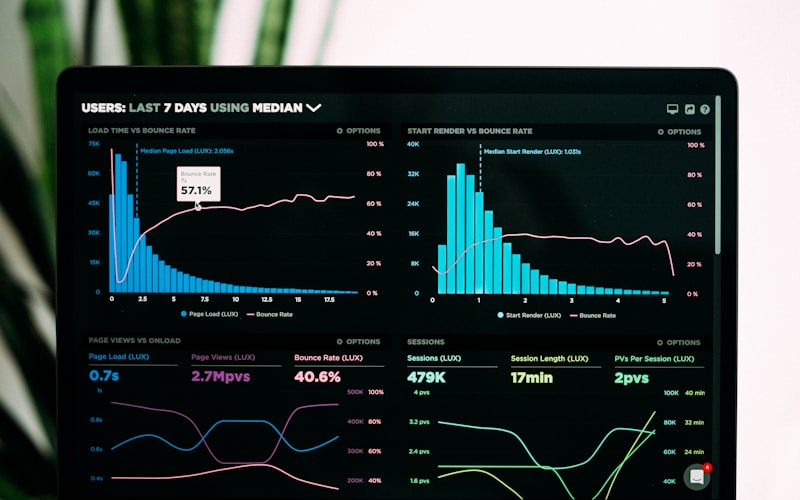
- Pages that load in 2 seconds have an average bounce rate of 9%
- Pages that load in 5 seconds have a bounce rate of 38%
- That's a 4x increase in people leaving without engaging
Why Speed Matters More Than Ever
1. Mobile Users Have Zero Patience
Over 60% of web traffic is now mobile. Mobile users are often on-the-go, multitasking, and have even less patience than desktop users. They expect instant results.
When your competitor's site loads in 1.5 seconds and yours takes 4 seconds, you've already lost the customer—before they've seen a single word of your content.
2. Google Rewards Fast Sites
Since 2018, page speed has been a direct ranking factor for Google. In 2021, Google introduced Core Web Vitals, making performance even more critical for SEO.
Faster sites rank higher. Higher rankings mean more traffic. More traffic means more customers.
3. Speed Builds Trust
A fast website signals professionalism and competence. When your site loads instantly, visitors subconsciously think: "This business has their act together."
A slow site signals the opposite: "If they can't manage their website, can they manage my project?"
The Psychology of Waiting
Humans are remarkably impatient online. Research from Microsoft found that the average human attention span is now just 8 seconds—shorter than a goldfish.
When someone clicks on your website, a mental timer starts:
- 0-2 seconds: "This is normal, I'll wait."
- 2-3 seconds: "Hmm, this is a bit slow."
- 3-4 seconds: "Something might be wrong."
- 4+ seconds: "I'm out of here."
Every fraction of a second matters.
Real-World Case Studies
Amazon
Amazon found that every 100ms of latency cost them 1% in sales. For a company doing billions in revenue, that's millions of dollars.
Walmart
Walmart reported that for every 1-second improvement in page load time, conversions increased by 2%.
Pinterest reduced perceived wait times by 40% and saw a 15% increase in search engine traffic and sign-ups.
BBC
The BBC discovered they lost 10% of users for every additional second their site took to load.
What Slows Down Websites
Understanding the culprits helps you fix the problem:
1. Unoptimized Images
Images often account for 50-80% of a webpage's total size. Large, uncompressed images are the #1 speed killer.
2. Poor Hosting
Cheap shared hosting means your site competes with hundreds of others for server resources. When traffic spikes, performance tanks.
3. Too Many Plugins/Scripts
Every plugin, tracking script, and third-party integration adds weight. Many sites have 20+ scripts loading, each adding milliseconds.
4. No Caching
Without proper caching, your server rebuilds every page from scratch for every visitor. It's like cooking a new meal for every customer instead of prepping ingredients.
5. Bloated Code
Poorly written code, unused CSS, and unnecessary JavaScript all slow things down.
How to Make Your Website Blazing Fast
Step 1: Test Your Current Speed
Use these free tools:
- Google PageSpeed Insights (pagespeed.web.dev)
- GTmetrix (gtmetrix.com)
- WebPageTest (webpagetest.org)
Aim for:
- Load time under 2 seconds
- PageSpeed score of 90+
- Core Web Vitals in the "Good" range
Step 2: Optimize Images
- Compress all images using tools like TinyPNG or ImageOptim
- Use modern formats like WebP
- Implement lazy loading for images below the fold
- Serve appropriately sized images for each device
Step 3: Upgrade Hosting
Invest in quality hosting with:
- SSD storage
- CDN (Content Delivery Network) integration
- Adequate resources for your traffic
- Good uptime guarantees
Step 4: Minimize and Defer Scripts
- Remove unused plugins and scripts
- Defer non-critical JavaScript
- Combine and minify CSS and JS files
- Load third-party scripts asynchronously
Step 5: Implement Caching
- Enable browser caching
- Use server-side caching
- Consider a caching plugin or CDN
The DNA Web Studio Speed Guarantee
Every website we build is optimized for speed from the ground up:
- Sub-2-second load times on mobile and desktop
- 90+ PageSpeed scores as standard
- Optimized images and modern formats
- Clean, efficient code without bloat
- Premium hosting included with our care plans
We don't just build beautiful websites—we build fast ones. Because we know that speed equals money.
Stop Losing Sales to Slow Loading
Every day your website is slow, you're losing customers to faster competitors. The math is simple: faster sites convert better, rank higher, and make more money.
Ready to see how fast your website could be?
Get Your Free Speed Audit → [blocked]

